Mold damage to slopes - signs and methods of control

Sometimes, when replacing old wooden structures with new metal-plastic windows, black spots appear on the slopes and quickly grow. It is not difficult to recognize mold in them. If no drastic measures are taken, the colonies of the fungus will increase rapidly.
What caused the problem, how to deal with it, and also how to prevent the appearance of mold – read below.
The reasons for the appearance of a mold colony on the slopes
Under the name "mold" hides a whole group of microscopic fungi: this is not a single species, but a collective name. Mold fungi are different — from conditionally harmless (and sometimes useful) to pathogenic, provoking serious diseases of humans and animals. Another unpleasant factor is the ability of mold to cause biocorrosion and biodegradation of building materials.
How does mold appear? For the colony to grow, a fungal spore (yes, sometimes only one) and favorable conditions for growth are necessary. Since this fungus is microscopic, it is impossible to notice its spores or prevent them from entering the room. The dispute can be carried by the flow of air during ventilation — and when replacing windows, often the old material of the frame or slopes is already infected. From the moment the spores penetrate into the porous material, very little time passes before the appearance of an obvious colony. But if the mold is visible to the naked eye, it means that the colony has already grown significantly. Consequently, it is quite viable and can spread to other surfaces (walls, wallpaper), and even worse, it can spread pathogenic spores through the air.
The main causes of mold growth on the slopes:
- Insufficient tightness of the walls of the building
- Technical errors during the construction of the house
- A common cause of mold on the first and last floors is flooding of communication rooms
- Prolonged absence of repair
- When replacing windows – incorrect installation of the mounting seam between the frame and the window opening
As soon as the spore gets on the porous surface of drywall, concrete or plaster, it has enough of such conditions for growth:
- High humidity in the room (more than 60%)
- High temperature (above 25°C)
- At the first stages — insufficient sunlight (ultraviolet radiation inhibits spores)
After replacing wooden structures with plastic ones, the conditions for mold growth become even more favorable, because new windows are more airtight. Wooden windows, due to their hygroscopicity, drew in excess moisture or let moisture out through cracks and pores in the wood, but metal-plastic ones leave excess moisture inside the room.
Thus, both humidity and temperature are growing in the room (air exchange with a cool street has also decreased). In the darkest corners, where moisture accumulates, the growth of a colony of fungi will begin. In this case, pay special attention to the places at the junction of the slopes, the connection of the window frame and the window opening. We remind you: the fungus is microscopic and before it appears on the surface of the material, it can settle in the pores. You don't see mold, and the finishing material is already affected quite deeply.
Steps to prevent the appearance of mold on the slopes of plastic windows
To prevent the appearance of mold, we eliminate favorable reasons for its development:
- To reduce humidity in the room, including on the surface of the slopes, it is necessary to provide fresh air. This can be achieved by constant ventilation, but it is better to install a supply ventilation valve. Do not forget that before the appearance of visible mold on the slopes, the space under the slopes may already be affected. Therefore, it is necessary to think about stable air exchange immediately when replacing windows
- Proper, three-layer filling of the mounting seam according to the DSTU, using steam, hydro and thermal insulation materials, will help to ensure an unhindered exit of excess moisture to the street and stop the penetration of moisture from the outside. With this installation, water droplets will not accumulate in the seam itself and the probability of internal damage to the finishing materials will decrease.
- Pay special attention to the arrangement of the slopes themselves. If they are insulated, this will reduce the risk of condensation droplets settling on the inside.
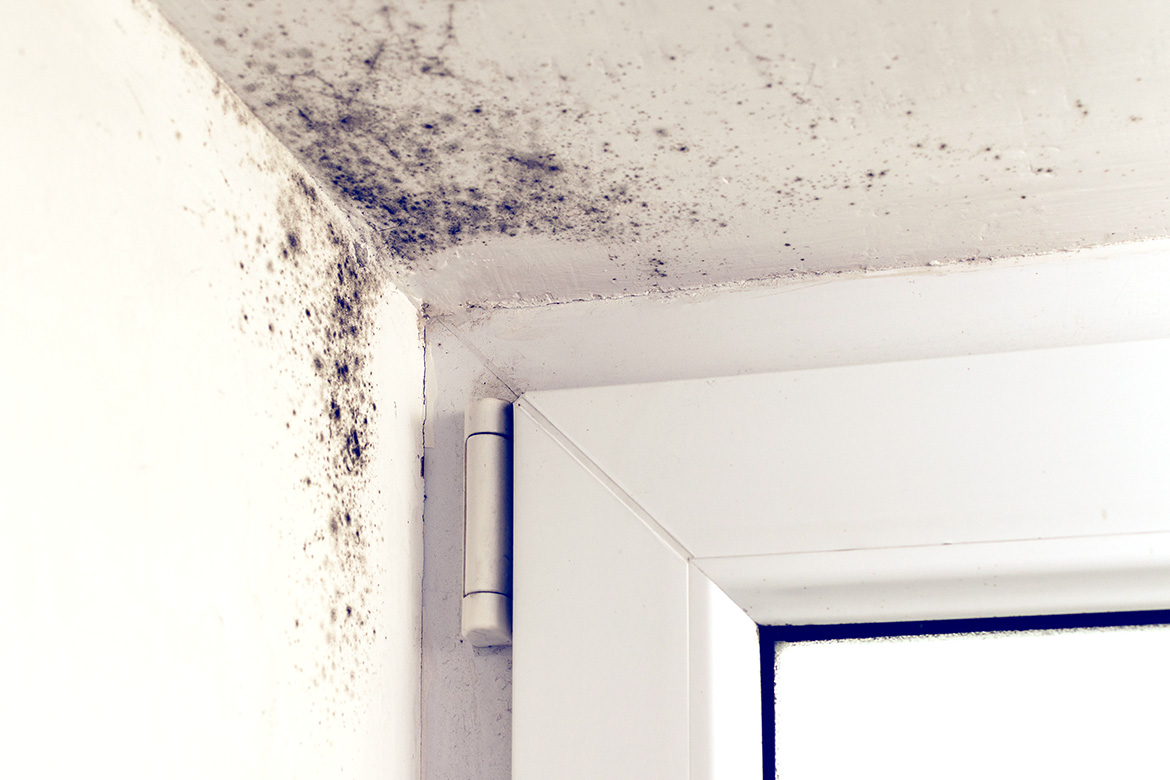
How to deal with a colony of mold on the slopes
If the mold has already appeared, then it's time to take drastic measures. Consider the stages of mold control on the slopes:
It's sad, but if mold has appeared on the outer surface of the slopes, you can't do without dismantling. This means that the inner part is partially or completely affected by the fungus. After dismantling, it is necessary to remove black spots with a scraper or a steam cleaner (first study whether the finishing material will tolerate intense heating). After cleaning, dry all surfaces with a hairdryer.
Next, disinfect all affected surfaces. Use special fungicidal preparations. They can penetrate deeply into the structure of the material and allow you to remove from there an invisible part of the colony.
To prevent the re-appearance of mold, take care of the maximum waterproofing of finishing materials. There are special waterproofing solutions that will close the pores of the material, which will prevent the growth of fungus inside.
Please note that the fact that you have removed the mold does not mean that it will not grow again. To fully get rid of the possibility of infection, only a change in the humidity and temperature in the room will help. Otherwise, the exhausting fight against mold will be carried out constantly. Recall that it is necessary to fight mold, since most often these are pathogenic fungi that are dangerous to your health.
You can order a high-quality professional installation of metal-plastic windows by following the link
Read more

Where is the best place to put shtulpovye structures

Blowing out the window: causes and solutions

How to care for plastic windows in winter
